The Door You Can't Open
Floor-to-ceiling doors photograph beautifully and weigh 140 kilograms. On the system that lets an 81-year-old open her own front door.
There is a particular embarrassment to a door that defeats you.
Not a locked door. Not a broken one. A door that simply requires more force than you have that morning — because your shoulder is playing up, because you are eighty-one, because you are carrying a child on one hip and a bag of groceries on the other. The door is technically functional. It opens. It just doesn't open for you.
Architecture talks a great deal about access. It is quieter on the subject of daily effort.
When Size Became the Specification
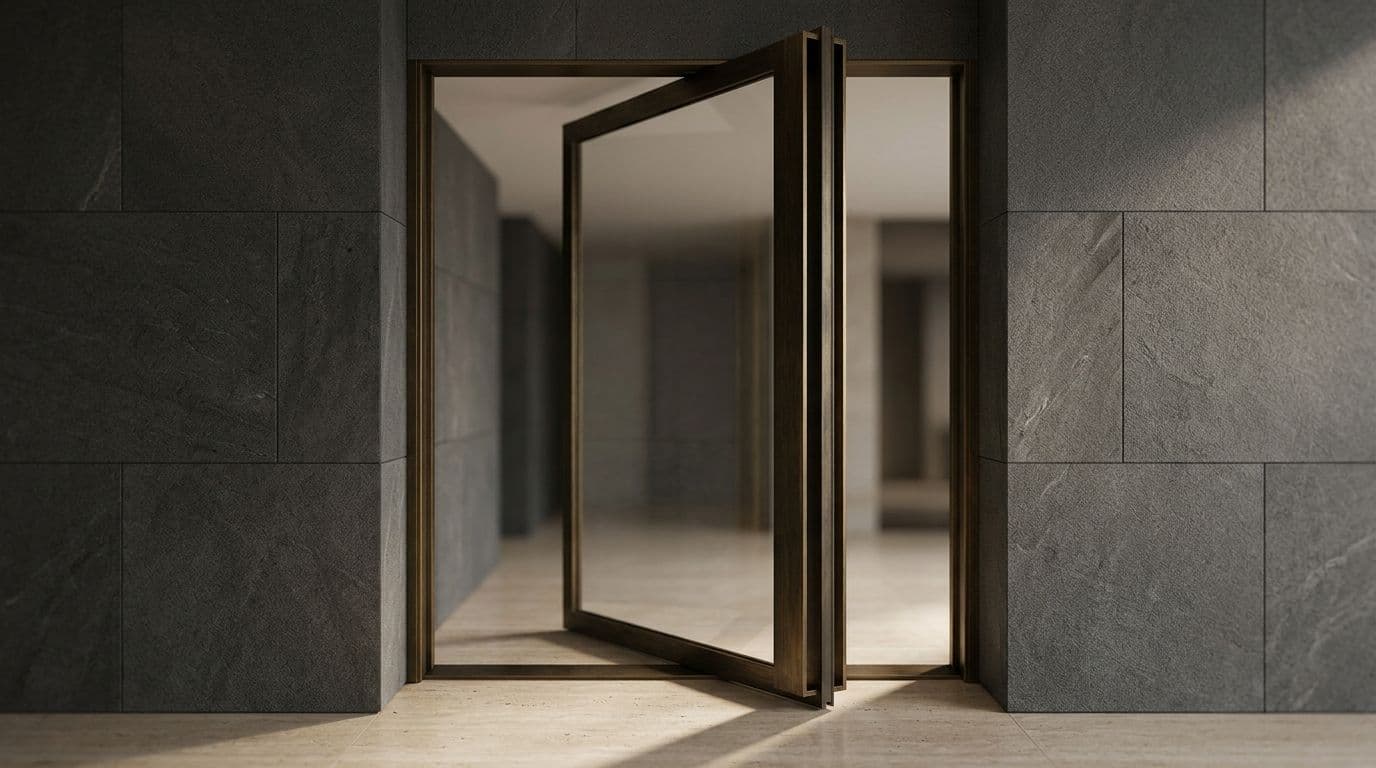
The market for residential doors shifted perceptibly in the last decade. Floor-to-ceiling heights became the ambition on virtually every project brief crossing an architect's desk — 9, 10, 12, sometimes 14 feet. The logic is sound enough. A door that runs the full height of a room does something interesting to a wall. It removes the horizontal break at the lintel, draws the eye upward, makes a threshold feel considered rather than merely functional.
The problem is mass.
A standard 8-foot door in 12mm toughened glass weighs approximately 80 kilograms. Take that same door to 10 feet and the weight climbs past 100 kg. At 12 feet in thicker glass — as structural requirements often demand at that scale — you are looking at 140 to 160 kilograms of glass pivoting from a single point. The door that photographs beautifully in an empty room, morning light raking across its surface, is not the same experience at 7 pm with wet hands, or at 73, or after a rotator cuff surgery.
The specification sheet does not mention any of this.
Who Is Actually Using the Door
Residential architecture is almost always designed for one demographic: the client as they are at the moment of commissioning. Healthy, in their fifties perhaps, engaged and energetic about decisions. The project takes two years. They move in at fifty-seven. They live there for thirty more.
By eighty, grip strength has declined measurably — studies consistently show reductions of 30 to 50 percent from peak in men and women alike. Wrist mobility, shoulder rotation, and simple reaction time all change. These are not exceptional conditions. They are the ordinary arithmetic of a long life, and the house that was commissioned at fifty needs to accommodate them.
Children run the same calculation in reverse: a ten-year-old at 35 kilograms cannot reliably operate a door whose hardware alone requires sustained force. Neither can anyone recovering from a hand fracture, managing arthritis in the knuckles, or navigating a space one-handed because the other arm holds something else.
The door, in other words, is not a static problem. It is a problem that compounds over time, in the very building where compounding time is supposed to feel like comfort.
The System Is the Specification
The answer is not to make smaller doors. The proportions that make a tall door architecturally interesting are legitimate. The answer is to recognise that a door of that scale requires a system engineered to carry its own weight — literally.
Pivot hardware with hydraulic damping distributes the load differently than a conventional hinge. A properly specified pivot floor spring on a 140-kilogram door can reduce the operating force at the handle to under 20 Newtons — roughly the effort of pressing a lift button. Soft-close mechanisms absorb the kinetic energy of the door's return, so it does not slam, does not require the user to actively restrain it, does not punish inattention.
Magnetic catches at the close point mean no final push is needed to seat the door. The door finds its position.
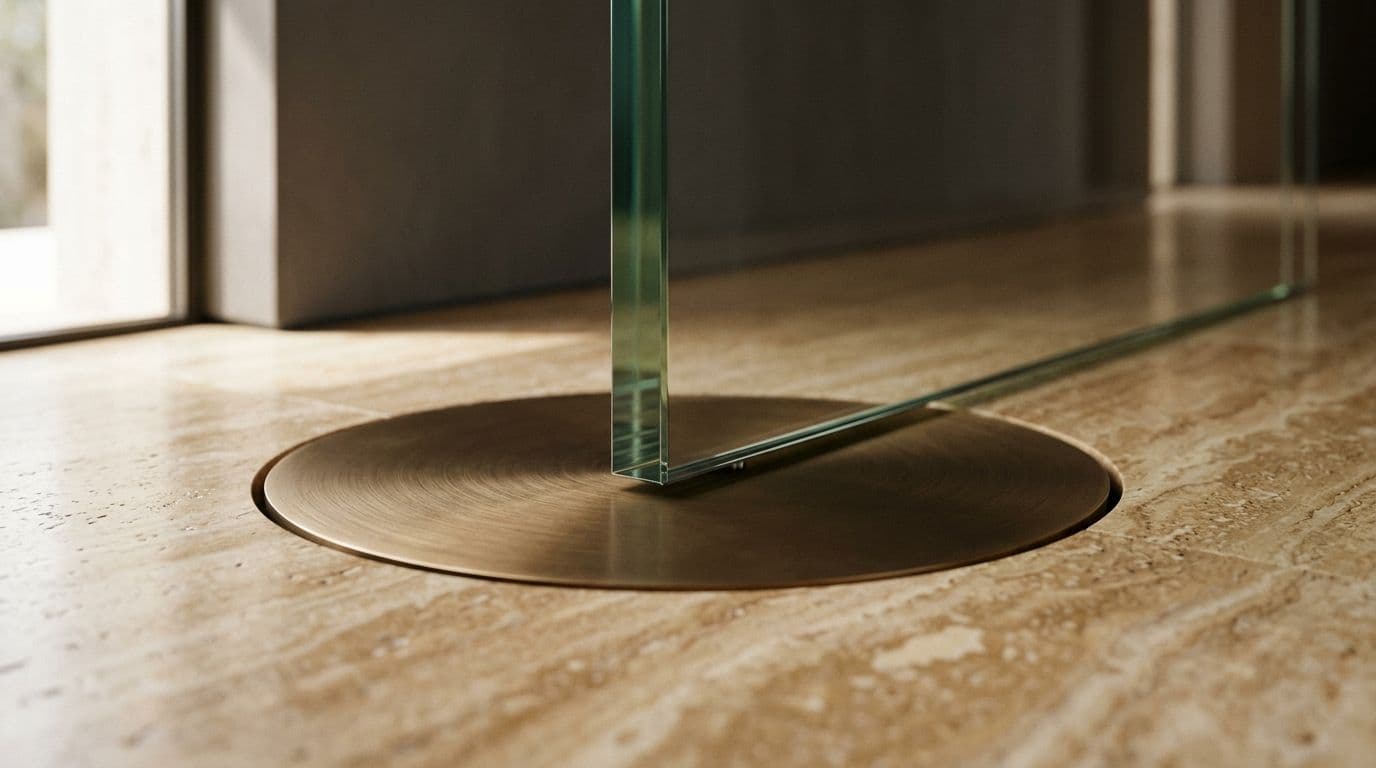
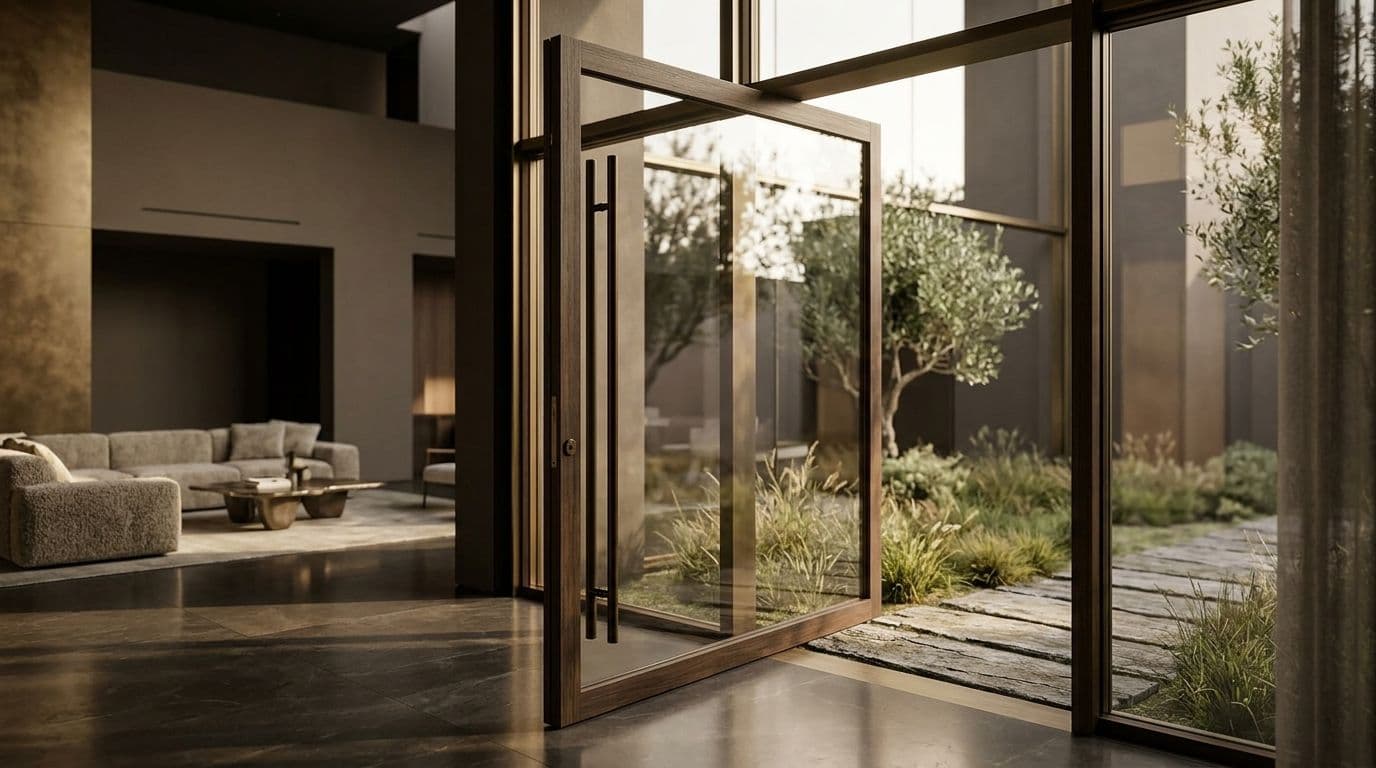
Balanced pivot geometry — where the pivot point sits not at the edge but 100 to 150mm in from the face — reduces the lever arm, which reduces the torque required from the person operating it. The door is the same size. The effort to move it is a fraction of what it would be on a standard offset hinge.
Aesthetic Is Not the Compromise
There is a persistent assumption in design conversations that accessibility is a concession — something added to a brief at the client's request, or mandated by code, that costs the project some of its ambition. This assumption is incorrect, and it costs projects nothing to abandon it.
A flush pivot door with concealed floor hardware reads as a wall until it moves. The pivot mechanism that makes it operable for a seventy-five-year-old is the same mechanism that removes every visible hinge from the face of the door. The soft-close damping that means a child cannot trap their fingers is the same system that eliminates the jarring close that cheapens the feel of any room.
The hardware that carries a 150-kilogram door safely is, by necessity, precise — manufactured to tolerances that cheaper systems do not attempt. That precision is apparent in use. A door that opens with a single finger, swings without effort, and seats silently against its frame communicates something about the building it belongs to.
It communicates that someone thought about it. All the way through.
A Specification Question Worth Asking
When a door is specified on a project — particularly a large-format pivot or a heavy sliding panel — there are four questions that rarely appear on the hardware schedule but probably should:
What is the operating force at the handle?
Specify it. A number, in Newtons. Not “easy to operate.”
What happens if the user releases the door mid-swing?
A 100-kilogram door left at 45 degrees will finish its arc. Where does it go, and how fast?
Is the handle geometry usable without a full grip?
Lever handles accessible to a partially closed fist; pull bars mounted at 900mm to 1050mm from floor level. These are not afterthoughts.
Will this specification work for the person who lives here at eighty?
Not in a liability sense. In a simple human sense: will they be able to open their own front door?
1986 and the Long View
NUMAEX has been making architectural glass since 1986. Fifty years of watching how buildings age, and how the people inside them age alongside them. The most frequent regret we hear from clients who commission large-format doors — beautiful doors, correctly proportioned, exactly what they wanted — is that nobody raised the question of weight early enough. By the time it surfaces, the hardware is already specified, the floor substrate is poured, and changing it costs more in time than money.
It costs about forty-five minutes in a meeting at concept stage.
The door you design today will be used in 2045. Specify accordingly.